Yes. Some modern kitchens skip wall cabinets entirely in favor of open shelves, taller pantry units, or expanded base cabinet drawers. This creates a more open look, but storage must be planned carefully.
Wall Cabinets vs Base Cabinets: Key Differences and When to Use Each
August 22, 2025
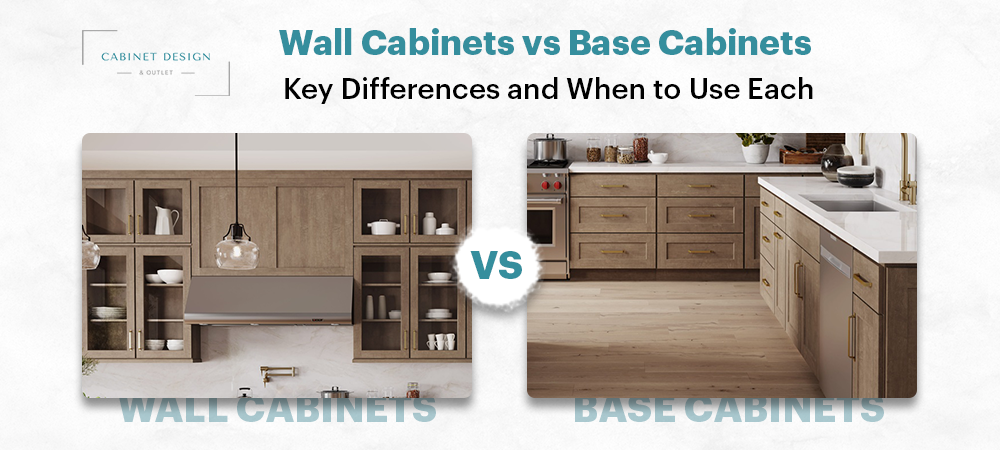
Kitchen cabinets do more than hold dishes and cookware. They define the style of your kitchen and determine how functional it will be for everyday use. When planning a remodel or new build, understanding the two main types of cabinets is essential. Wall cabinets and base cabinets each have their role, and knowing how they work together will help you create a layout that looks wonderful and functions beautifully.
At Cabinet Design and Outlet, we exclusively carry JSI cabinetry, which offers quality construction, beautiful finishes, and features like soft-close hinges that come standard on all styles. In this guide, we will compare wall and base cabinets, explain when to use each, and share tips on designing the perfect balance for your home.
What Are Wall Cabinets?
Wall cabinets, also called upper cabinets, are mounted to the wall above your countertops, appliances, or sink. Standard installation places them 18 inches above the countertop, which keeps them within easy reach while leaving room for small appliances on the counter.
Typical Sizes
Height: 12” - 42”
Depth: Standard depth is 12 inches, but deeper options up to 24 inches are available for specific areas or with modifications.
Special Placement: Cabinets above the refrigerator are often 24 inches deep for improved functionality. These need extra support, such as a wall or side refrigerator cabinets.
Wall cabinets are best for lightweight, frequently used items such as dishes, glasses, spices, and pantry goods. Because they sit at eye level, they also have a significant impact on how open and spacious the kitchen feels.
Pro Tip: In smaller kitchens, choose glass-front doors or open shelving to keep wall cabinets from feeling bulky.
JSI Highlight: JSI offers beautiful upper cabinet styles like Dover White, Essex Castle, and Trenton Ivory, all available with quality finishes and durable construction.
What Are Base Cabinets?
Base cabinets, also called lower cabinets, form the foundation of your kitchen. They rest on the floor directly and support countertops, sinks, and appliances.
Typical Sizes
Height: 34.5 inches plus a 1.5-inch countertop for a total working height of 36 inches.
Depth: Standard depth is 24 inches, but they can be modified to shorter depths to fit in tighter kitchens or small islands.
Base cabinets are designed for heavy-duty storage and are the perfect place for pots, pans, small appliances, and cleaning supplies. They often include drawers, pull-out shelves, or vertical organizers.
Pro Tip: Invest in soft-close drawer hardware for a quieter, smoother experience. JSI base cabinets already come with soft-close hinges included so that you can enjoy this feature without an upgrade charge.
JSI Highlight: Styles like JSI’s Essex Driftwood or Dover Truffle give base cabinets the warmth of wood tones that are trending in today’s kitchens.
When to Use Wall Cabinets
Wall cabinets are ideal when you need extra storage but do not have the floor space for more base units. They are especially helpful in galley and L-shaped kitchens where vertical space can be maximized. In open or minimalist kitchens, they add vertical interest without overwhelming the room.
If you want to display glassware, decorative bowls, or cookbooks, choose wall cabinets with glass doors or open shelving. For a more modern look, use fewer upper cabinets and keep the walls open with tile or paint for a spacious feel.
JSI Highlight: Many JSI wall cabinets have the option for prepping for glass and painted interior modifications.
When to Use Base Cabinets
Base cabinets are essential in almost every kitchen. They provide the foundation for countertops, sinks, and cooking appliances while offering deep, practical storage. If you have the space, choose configurations that include drawers for pots and pans or pull-out organizers for baking sheets.
In kitchens with limited wall space, taller pantry cabinets or extended base cabinet drawers can replace the need for many upper cabinets. This approach can make the space feel more open without sacrificing storage.
JSI Highlight: JSI offers base cabinets in a wide variety of widths, depths, and drawer configurations. This makes it easier to design a kitchen that is both stylish and functional without the high cost of custom cabinetry.
How to Balance Both in Kitchen Design
Most kitchens work best with a combination of wall and base cabinets. The right balance depends on your cooking habits, storage needs, and desired aesthetic.
- If your kitchen feels tight, reduce the number of wall cabinets and choose open shelving.
- If you have limited wall space, extend the functionality of your base cabinets with drawer stacks and vertical dividers.
- Consider how often you cook. Frequent cooks benefit from base drawers for heavy cookware and wall cabinets for everyday dishware.
Storage Optimization Tips
- Use pull-out shelves in base cabinets to make deep storage areas more accessible.
- Install under-cabinet lighting under wall cabinets to brighten your work areas.
- Use drawer dividers for utensils, baking sheets, and cutting boards.
- Consider corner cabinet solutions like a Lazy Susan with drawers.
Cabinet Material and Finish Recommendations
Base cabinets see the most use, so choose materials like durable plywood or high-quality MDF. Look for strong finishes that will hold up frequent cleaning and heavy items. Wall cabinets can feature lighter materials but should still match or coordinate with your base cabinets for a cohesive look.
JSI Highlight: All JSI cabinets are made with high-quality plywood construction, beautiful finishes, and functional features that make them an excellent investment for any kitchen. From crisp whites to rich wood tones, JSI offers finishes to match any style.
Conclusion
When comparing kitchen wall cabinets vs base cabinets, remember that wall cabinets are perfect for lightweight, frequently used items. In contrast, base cabinets are essential for heavy-duty storage and countertop support. Both have unique roles, and the right combination will give you a kitchen that is both beautiful and functional. At Cabinet Design and Outlet, we specialize in JSI cabinetry, offering quality styles that fit a range of budgets and design preferences. Contact our design team today for a free kitchen plan and see how our cabinets can bring your vision to life.
Frequently Asked Questions
Can I have a kitchen without wall cabinets?
Are base cabinets more expensive than wall cabinets?
Generally, yes, since they require more materials and structural support. However, with JSI cabinetry, both wall and base cabinets are priced competitively without sacrificing quality.
What is the standard height for base and wall cabinets?
Base cabinets are 34.5 inches tall, with the countertop bringing the height to 36 inches. Wall cabinets are typically installed 18 inches above the countertop and range in height from 12 inches to 42 inches.
How can I maximize storage in a small kitchen?
Use taller wall cabinets, add organizers inside base cabinets, and opt for pull-out shelves. JSI offers modifications like reduced-depth base cabinets for cramped areas.
Can RTA cabinets be used for both wall and base setups?
Yes. JSI offers both wall and base cabinets in RTA form, making it easy to mix and match a layout that works for your space and budget.
Recent Posts